
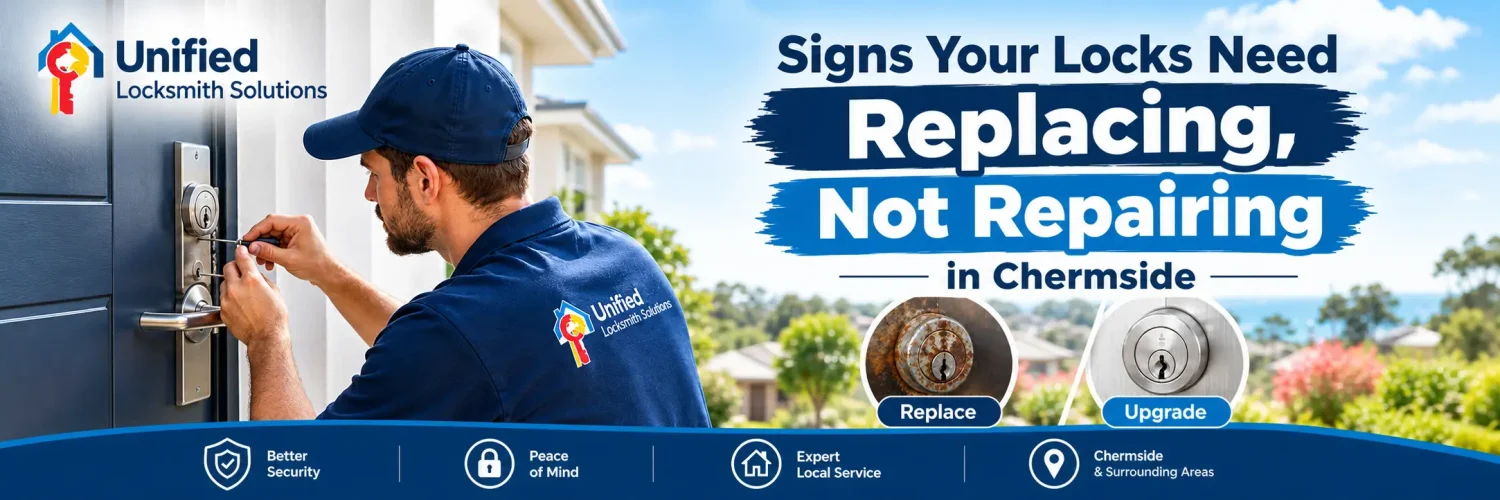
Most people only think about their locks when something’s already gone wrong — a key that won’t turn, a door that feels loose, or a lock that’s simply seen better days. The truth is, there are clear signs your locks need replacing rather than just repairing, and catching them early can save you from a much bigger security problem down the track.
This guide walks through the key warning signs to watch for, how to tell repair and replacement apart, and why this matters a little more for homes in Chermside’s climate.
Signs Your Locks Need Replacing
Here are the clearest indicators that a repair simply won’t cut it anymore.
1. Difficulty Turning the Key
If your key needs extra force, jiggling, or repeated attempts before the lock engages, that’s usually internal wear talking, not a one-off fault.
This tends to get worse over time rather than better, and it’s often the earliest sign most homeowners notice — usually dismissed for months before it’s finally addressed.
2. Visible Rust or Corrosion
Rust weakens the internal components of a lock, making it easier to force and less reliable day to day. Once corrosion sets in, cleaning and lubrication rarely solve the problem for good.
3. Loose or Wobbly Lock Components
A lock should always feel solid when it’s used. If the cylinder wobbles or the handle feels loose against the door, the internal fixings have likely worn beyond a simple tightening fix.
4. Frequent Jamming or Key Breakage
A key that regularly gets stuck, or has snapped off inside the lock before, is a strong signal the mechanism itself is failing rather than just the key.
5. Outdated or Low-Security Lock Technology
Older lock styles simply don’t offer the same resistance to picking or forced entry as modern hardware. If your locks came with the house and you’ve never upgraded them, it’s genuinely worth having them assessed.
6. Your Key Ring Has Grown Too Long
If you’re juggling several different keys for doors that could realistically share one system, that’s less a lock failure and more a sign it’s time to simplify with matched, upgraded hardware.
“A lock doesn’t need to be broken to be a risk — it just needs to be behind the times.”
Repair vs Replace: How to Tell the Difference
Not every lock problem means a full replacement, but knowing the difference matters.
When Repair Is Usually Enough
Minor stiffness, dirt build-up, or a slightly misaligned strike plate can often be fixed without replacing the whole unit. These are isolated issues rather than signs of overall failure.
A quick clean, some lubrication, or a minor adjustment is often all it takes to bring an otherwise sound lock back to normal working order.
When Replacement Is the Safer Choice
Replacement makes more sense once you’re seeing multiple issues at once, visible damage, or a lock that’s simply reached the end of its working life. Trying to patch a failing lock repeatedly usually costs more time than it saves.
A Simple Way to Decide
If you can point to one clear, isolated issue, repair is usually worth trying first. If you’re ticking off two or three signs from the list above at the same time, that combination is a much stronger case for full replacement.
Expert tip: If more than one key on the same lock is struggling, it’s almost always the lock itself, not the keys, that needs attention.
Why This Matters More in Chermside’s Climate
Brisbane’s northside climate creates a few extra challenges for home security hardware.
Humidity and Coastal Air Effects on Metal
Queensland’s humidity accelerates corrosion in metal components faster than drier climates, which means locks can wear out sooner than homeowners expect based on age alone.
Older Queenslander Homes and Ageing Hardware
Many homes around Chermside feature original hardware from decades past. Older Queenslander-style doors often still carry their original locks, which were never designed to meet today’s security standards.
Timber Doors and Seasonal Movement
Queensland’s shift between humid summers and drier winters can cause timber doors to swell and contract slightly through the year, which puts extra strain on lock alignment over time — another reason locks in older homes tend to wear faster than expected.
What Happens If You Ignore These Signs
Putting off a lock issue rarely makes it disappear, and the risks tend to grow quietly over time.
Increased Break-In Risk
Worn or outdated locks are exactly what intruders look for, since they’re easier to force or bypass compared to newer, more secure hardware.
Lock Failure at the Worst Possible Time
A struggling lock has a habit of failing completely at the most inconvenient moment — usually when you’re rushing out the door or arriving home late at night.
A Compromised Sense of Security at Home
Beyond the physical risk, a lock that constantly feels unreliable also chips away at how secure you actually feel in your own home, which matters just as much as the hardware itself.
How Long Do Locks Actually Last
As a general guide, most residential locks last somewhere around 7 to 10 years under normal daily use, though this varies depending on quality, climate exposure, and how often the door is used.
A few habits that extend a lock’s working life:
- Lubricate locks periodically to reduce internal wear
- Avoid forcing a key that feels resistant
- Address rust or corrosion as soon as it appears
- Get locks assessed if you notice more than one warning sign
- Keep an eye on how the door itself sits in its frame over time
Expert tip: Treat lock assessment the same way you’d treat a car service — a quick check every couple of years catches problems long before they become emergencies.
Signs You’re Getting Close to That 10-Year Mark
If you can’t remember the last time your locks were serviced or replaced, that alone is often a reasonable prompt to get them checked, regardless of whether they’re showing obvious problems yet.
Choosing the Right Locksmith for Lock Replacement Near Chermside
If replacement is on the cards, choosing the right professional matters just as much as the decision itself.
Look for Licensed, Experienced Providers
A licensed locksmith with genuine experience in residential lock replacement will assess the whole door, not just the lock, to make sure the new hardware actually fits and functions properly.
Experience matters here more than people expect — a rushed or inexperienced installation can leave a brand-new lock feeling almost as unreliable as the one it replaced.
Ask About Upgraded Security Options
Modern lock replacement is also a chance to upgrade to higher-security hardware, rather than simply swapping in the same style of lock that was there before.
Get the Whole Door Assessed, Not Just the Lock
A locksmith worth trusting will check the door frame, strike plate, and hinges alongside the lock itself — a new lock fitted to a misaligned door won’t solve the underlying problem for long.
Final Thoughts
Recognising the signs your locks need replacing isn’t about being overly cautious — it’s about staying ahead of a problem before it becomes a genuine security risk. A lock that struggles today is a lock that’s likely to fail completely tomorrow.
It’s a small job in the scheme of home maintenance, but it’s one that directly affects how safe you and your family feel every single day.
If your home’s locks are showing any of these signs, it’s worth having a trusted local locksmith near Chermside take a proper look before it turns into something more urgent.