
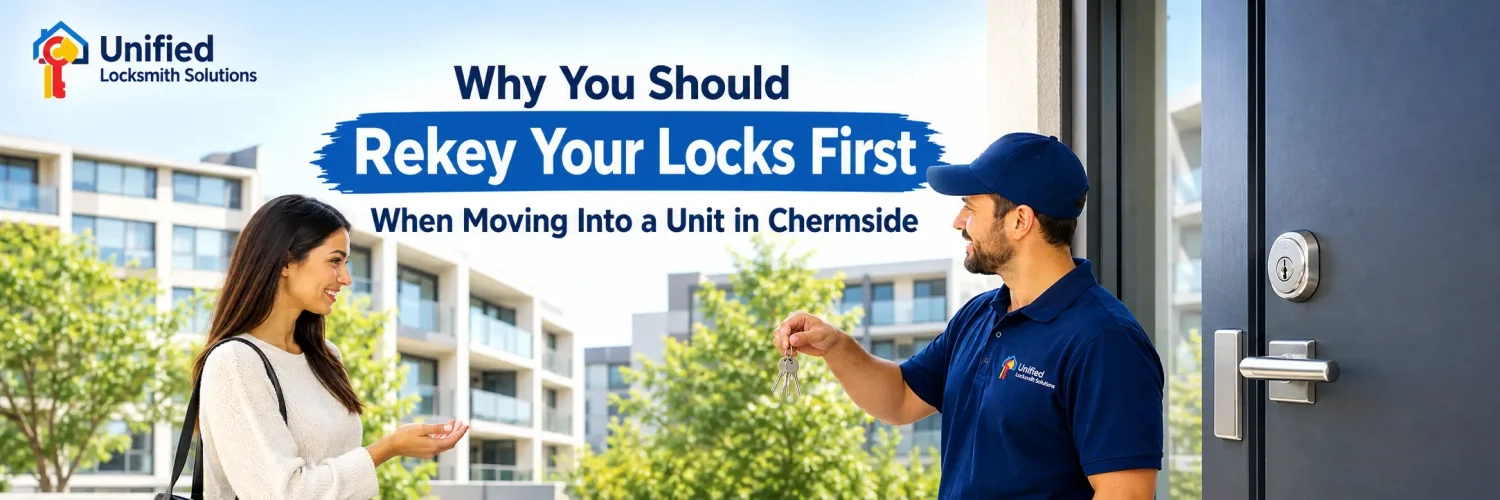
Moving into a new unit comes with a long list of things to sort out, and locks are usually the last thing on anyone’s mind. But rekeying should genuinely be one of your first calls, not an afterthought — because right now, you have no real idea how many other keys to your new place are still floating around.
This guide explains exactly why rekeying matters so much after moving in, how it’s different from changing your locks entirely, and why it deserves extra attention for anyone renting a unit near Chermside.
Why Rekey Locks After Moving In
The short answer: rekeying gives you full control over who can enter your home, and it’s the only way to be certain of that after a move.
You Don’t Know Who Else Has a Key
Even if you were handed a full set of keys at move-in, there’s no way to know how many copies exist elsewhere. Previous tenants may have made spares without ever mentioning it.
Previous Tenants, Agents and Tradespeople May Still Have Access
Real estate agents, cleaners, maintenance staff, and past occupants may all have held keys to your unit at some point. None of that history disappears just because a new lease started.
It’s the Fastest Way to Reset Your Security
Rekeying is the simplest, fastest way to reset who can access your home — without needing to replace any hardware at all. It’s a genuine reset button, not a cosmetic fix.
Insurance and Peace of Mind
Some landlords and insurers view a rekeyed lock as a sign of a well-managed tenancy, since it shows access has been properly accounted for from day one. It’s a small detail, but it can matter if a claim ever needs to be made.
What Rekeying Actually Means
It’s worth understanding what actually happens during the process before deciding whether it’s right for your situation.
Rekeying vs Replacing Locks
Rekeying changes the internal pins inside your existing lock so old keys stop working, while the lock and handle themselves stay exactly the same. Replacing locks swaps out the entire unit, hardware included.
For most tenants, rekeying does the job just as effectively, without the extra disruption of new hardware being fitted to the door.
Choosing between the two usually comes down to the condition of your current lock rather than personal preference alone — a well-maintained lock rarely needs full replacement just to solve a key-control problem.
How the Process Works
A locksmith removes the lock cylinder, adjusts the internal pin configuration, and issues you a new key that only works with the updated setup. Old keys become useless the moment it’s done.
The whole process is usually done on-site, without needing to remove or replace the door hardware itself, which keeps disruption to a minimum during an already busy move-in period.
Expert tip: Ask your locksmith to rekey all entry points to a single key — it’s a small request that makes daily life noticeably easier.
Why This Matters More for Chermside Unit Renters
Chermside’s mix of apartments and unit blocks creates a slightly different risk profile compared to standalone homes.
Shared Entry Points in Multi-Unit Buildings
Many unit complexes near Chermside share building entries, corridors, or car park access alongside individual unit doors. That shared setup makes controlling your own key even more important.
High Tenant Turnover in Rental Units
Rental units tend to change hands more often than owner-occupied homes. Each previous tenancy is another opportunity for a spare key to have been made and never accounted for.
Managing Access Without Overstepping Lease Terms
Rekeying is usually fine for renters, but it’s worth checking your lease first — some agreements require landlord approval before any lock changes take place.
Balancing Privacy With Building Requirements
Some unit blocks near Chermside have shared access systems tied to fobs or building-wide master keys, which means rekeying your own door doesn’t always cover every entry point you use. It’s worth checking whether shared access needs to be handled separately through building management.
“You can’t control who held a key before you moved in — but you can absolutely control who holds one from today onward.”
For renters especially, that sense of control is worth more than the small effort it takes to arrange.
Signs Your New Unit Needs Rekeying Immediately
A few situations make rekeying less optional and more of a priority.
You Received Fewer Keys Than Expected
If you were only handed one or two keys with no clear explanation of how many exist in total, that’s a reasonable trigger to rekey straight away.
The Unit Has Had Multiple Previous Tenants
Units with a longer rental history naturally carry more uncertainty around who’s held keys over the years, which makes a fresh reset worth prioritising early on.
You’re Renting Through a Third-Party Platform or Sublet
Subletting or platform-based rentals often involve more hands passing through than a standard lease. This is one of the clearest cases where rekeying genuinely earns its place at the top of your move-in list.
You’ve Noticed Signs of Wear on the Existing Lock
If the lock already feels loose, sticky, or shows visible wear, it’s worth mentioning to your locksmith during rekeying — sometimes what looks like a simple key issue is actually early signs the hardware itself needs attention.
Rekeying vs Changing Locks: Which One Do You Need
Here’s a simple way to decide between the two options:
- If the existing hardware is in good condition, rekeying is usually enough
- If a lock feels worn, sticks, or looks outdated, full replacement may be the better call
- If you simply want peace of mind about old keys, rekeying solves that directly
- If you want upgraded security features like smart locks, replacement is the way to go
Who to Talk to Before You Rekey
A quick conversation upfront avoids any confusion with your landlord or property manager down the track.
Check Your Lease Agreement First
Most leases outline whether tenants can arrange their own lock changes or need written approval beforehand. This takes two minutes to check and saves any awkward conversations later.
Confirm With Your Landlord or Property Manager
Expert tip: Even where rekeying isn’t formally required, letting your property manager know shows good faith and keeps your tenancy record clean.
Simple Move-In Security Checklist for Chermside Renters
Once you’ve settled the rekeying question, a few extra steps round out your move-in security:
- Confirm how many keys exist and who currently holds them
- Rekey before or shortly after your move-in date
- Test all locks, including balcony and storage doors
- Note any shared building access points and how they’re secured
- Keep your locksmith’s contact details saved for future reference
- Photograph key handover paperwork for your own records
- Ask about rekeying options for letterboxes and storage cages too
These small steps take very little time, but they set the tone for a tenancy where you’re genuinely in control of your own space from the very first day.
Conclusion
Rekeying isn’t just a nice-to-have when you move into a new unit — it’s genuinely one of the most practical steps you can take to start your tenancy with real peace of mind. A small, affordable job on day one saves you from wondering who else might still hold a key down the track.
It’s also one of the few move-in tasks that’s entirely within your control, unlike waiting on internet connections or utility transfers that depend on other people’s timelines.
If you’re settling into a new unit near Chermside, make rekeying one of your first calls, not an afterthought once something feels off.